Seoul Station to Downtown Hotel Transit: The Street Pavement and Curb Friction Matrix for Arriving Guests
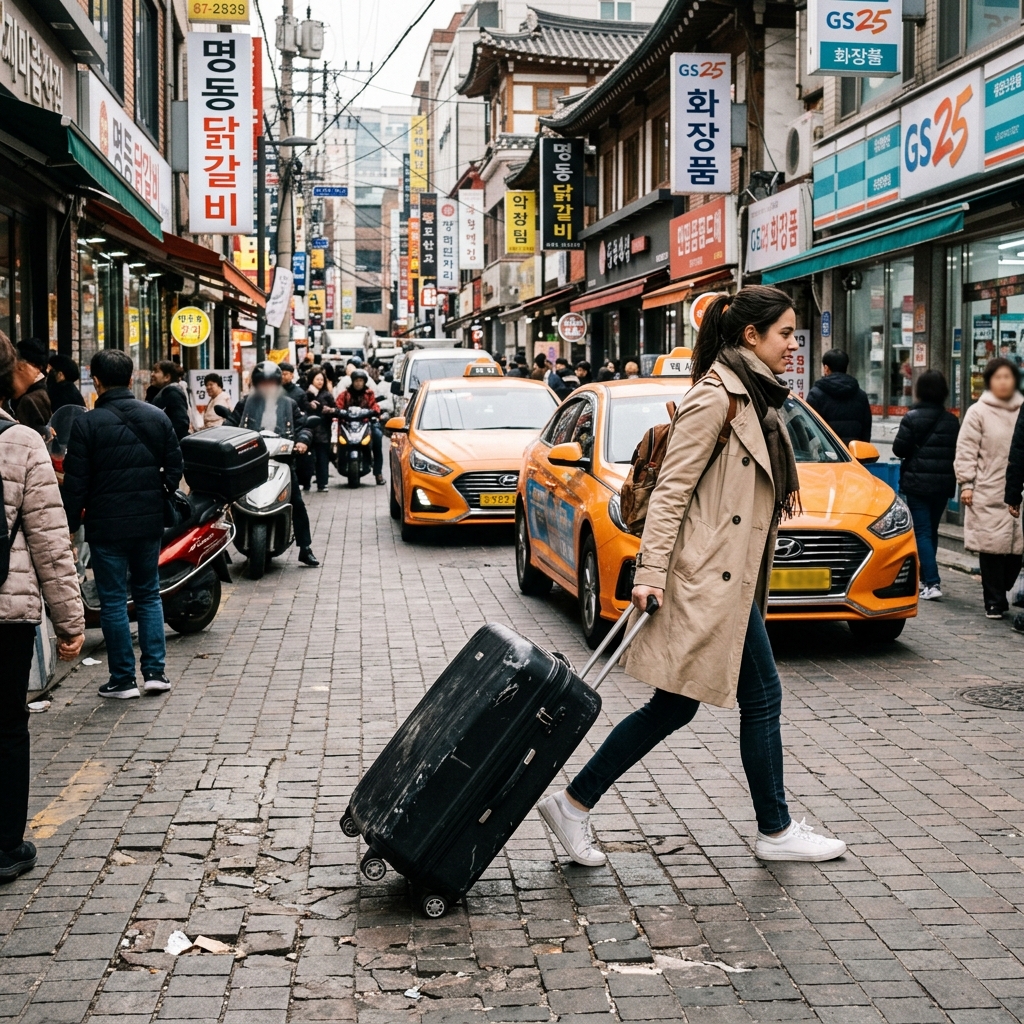
Stepping off the high-speed Airport Railroad (AREX) train at Seoul Station marks the successful conclusion of your airport transit leg. The next logistical hurdle is moving your heavy travel gear from the terminal platforms straight to your downtown hotel lobby in districts like Myeongdong, Central Jongno, or Dongdaemun.
While mapping software shows short distances, dragging large check-in bags across Seoul's historic central streets introduces intense physical resistance. Understanding the layout of urban pavements, high stone curbs, and pedestrian crosswalk timings is critical to prevent wheel damage and preserve your physical stamina.
The Street Level Resistance: Asphalt vs. Tactile Paving
Once you exit the modern, flat concrete floor surfaces of the main station passenger hall, the outdoor pedestrian pathways present various structural terrain challenges.
| Central Seoul Street Zone | Pavement Material Layout | Luggage Wheel Resistance | True Walking Transit Impact |
|---|---|---|---|
| Historic Alley Intersections | Aged asphalt with exposed gravel aggregates | High (Continuous vibration and rattling) | Increases physical fatigue, risks handle snapping |
| Main Commercial Avenues | Interlocking concrete brick pavers | Medium (Minor joint gaps cause wheel catching) | Requires steady, firm pulling force |
| Subway Exit Perimeters | Raised yellow tactile warning blocks | Extreme (Bumps cause bags to tip sideways) | Forces frequent stopping to realign gear |
Older commercial sectors flanking the historic core retain narrow sidewalks that slope sharply toward the active driving lanes to facilitate rain drainage. Pulling a heavy 28-inch rolling suitcase on a sideways incline forces your wrists to exert constant counter-pressure, which accelerates physical exhaustion after a long international flight.
The Concrete Obstacle: Curb Heights and Pedestrian Islands
Navigating central intersections with multi-lane traffic requires crossing extensive pedestrian refuge islands. While modern infrastructure mandates curb cuts, older sectors still feature sudden 10cm to 15cm stone drops.
The Wheel Impact Trap: Bumping a fully loaded suitcase down a sharp stone curb edge applies severe structural stress to standard plastic spinner wheels, frequently causing the axle housing to crack.
The Crosswalk Signal Race: Surface pedestrian crosswalk lights across major avenues run on rigid, high-speed automated timers. Hauling multiple bags across eight lanes of traffic within a tight 30-second window triggers high mental stress for families or senior travelers.
Bypassing Street Level Friction
To protect your luggage assets and eliminate transit exhaustion, minimize long outdoor walking sprints. If your target accommodation sits more than 400 meters away from a major subway portal, do not attempt to drag your suitcases across the outdoor brick lanes.
Instead, utilize the dedicated, flat underground transit passageways where available, or step directly into the official regular taxi queue lines situated on the flat western perimeter of Seoul Station near Exit 15. A short taxi ride to a nearby central hotel typically takes around 15 minutes and costs around 8,000 KRW (approx. $5.90) to 12,000 KRW (approx. $8.90) depending on traffic, which is a small price to pay to protect your luggage. This allows a professional driver to handle the final surface leg straight to your hotel's front awning. To secure your hotel coordinates entirely on flat, highly accessible ground featuring seamless subway access, checking out pre-verified central properties is essential. Check here to review secure hotel setups.
While mapping your street path is essential, choosing the correct station exit is the actual starting point of a friction-free hotel arrival. Read our guide on Seoul Station Exit 1 vs Exit 15: The Ultimate Structural Mapping for Hotel Arrivals to select your optimal exit portal.
📍 Data verified via official geographic data structures from the Korea Tourism Organization (TourAPI).
🏨 Secure Vetted Hotels via Agoda → Browse Verified Stays (Agoda)
🎫 Book Official Rail passes via Klook → Get Regional Rail Passes (Klook)
⚡ Full affiliate links & booking codes: ↓ See Comment Section below


🌐 Seoul Station to Hotel Transit Friction
ReplyDelete☑️ [Verified Stays] Flat-ground central accommodations near transit lines (Agoda)
☑️ [Official Transit Pass] Pre-book verified national rail codes and transport passes (Klook)