Seoul Station Exit 1 vs Exit 15: The Ultimate Structural
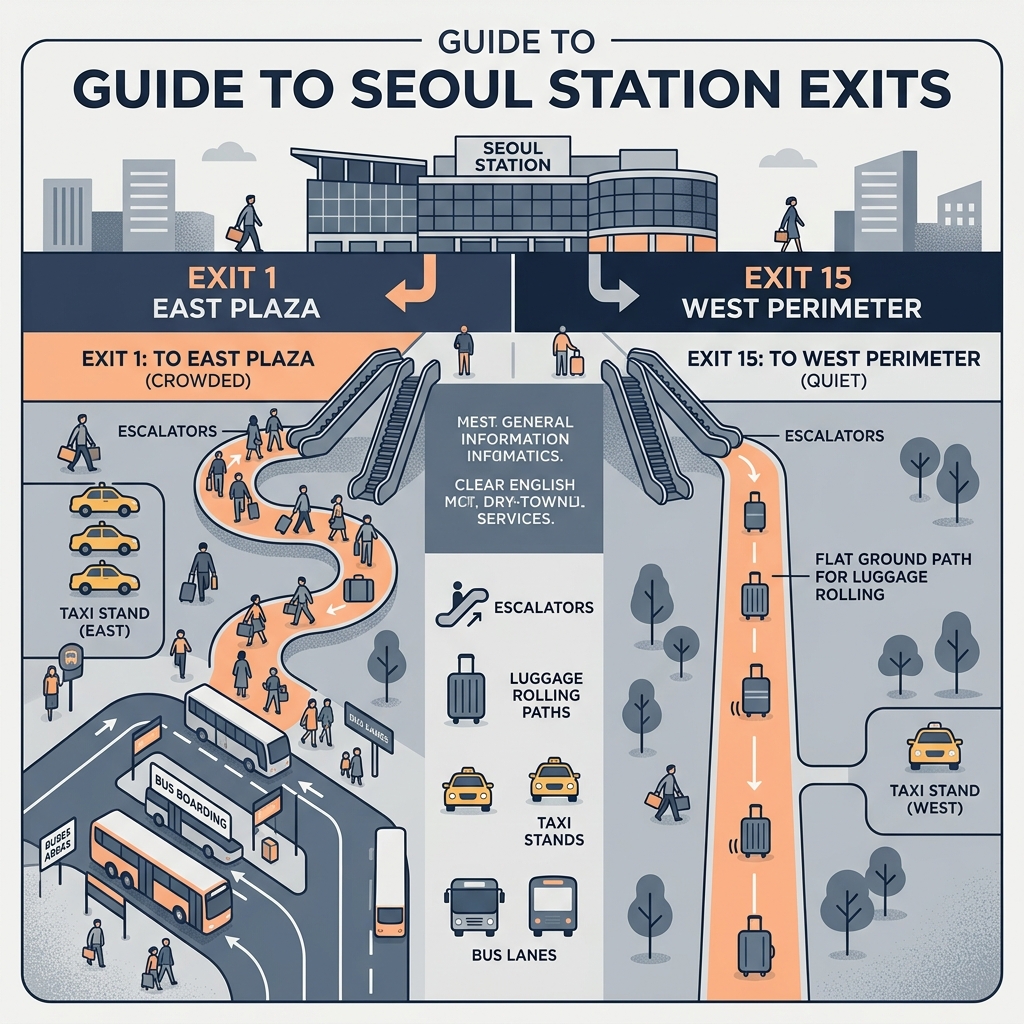
Booking an accommodation flanking Seoul Station requires looking past generic flat map coordinates. Because this central terminal is a massive multi-level transportation hub handling thousands of local commuters and international travelers daily, where you choose to emerge onto street level dictates your initial arrival friction.
The two primary gateways for tourist traffic—Exit 1 on the historic eastern plaza and Exit 15 on the modern western boundary—feature entirely different structural layouts, walking terrains, and luggage transit configurations.
The Structural Divide: East Plaza vs. West Perimeter
| Station Gateway Terminal | Primary Neighborhood Connection | Elevator & Ramp Availability | True Pedestrian Crowd Friction |
|---|---|---|---|
| Exit 1 (Eastern Plaza) | Myeongdong, Namdaemun Market, Namsan high-rises | Moderate (Hidden behind main rail tracks) | High (Continuous commuter waves) |
| Exit 15 (Western Perimeter) | Huam-dong, Cheongpa-dong, boutique lanes | Premium (Direct street-level elevator portal) | Low (Quiet, streamlined transit) |
Exiting through the wrong portal with 25kg check-in suitcases can force you into a grueling 20-minute detour across multi-lane highways or trap you on long concrete staircases that lack rolling ramps.
Exit 1: The Main Plaza and High-Rise Bottleneck
Exit 1 serves as the historic front face of Seoul Station. It feeds directly into the massive open-air transit plaza connecting to the central high-rise business blocks.
The Crowd Friction: This zone is the primary junction for city bus lanes and domestic KTX trains. During morning or late-afternoon rush hours, walking out of Exit 1 means pushing through thick streams of fast-moving local commuters.
The Obstacle Gauntlet: If your hotel sits deep inside the Myeongdong commercial grid, walking there from Exit 1 requires navigating wide asphalt pedestrian islands, tight crosswalk signal timers, and sudden stone curb drops that can easily crack plastic suitcase wheels.
Exit 15: The Dedicated Airport Railroad Safe Zone
Exit 15 occupies the quiet, modern rear perimeter of the station complex. It is engineered specifically to service the high-speed Airport Railroad (AREX) terminal.
The Direct Link: Because the AREX tracks terminate at the absolute western edge of the basement shell, Exit 15 sits directly above the airport platform elevators. You ride straight up to the street pavement without dragging your bags through the main commuter concourse.
The Flat Terrains: The sidewalks stretching outside Exit 15 feature wide, modern concrete slabs with flat ground gradients. It is an ideal, stress-free drop zone for hailing a local regular taxi or walking directly to the western business hotel cluster. Hailing a local taxi near Exit 15 to nearby hotels typically costs around 8,000 KRW (approx. $5.90) to 12,000 KRW (approx. $8.90) depending on traffic, which is a small price to pay to protect your luggage assets.
Selecting Your Optimal Base
To protect your physical energy and ensure a seamless arrival, match your hotel selection directly to the western terminal boundaries. Selecting flat-ground accommodations located right outside Exit 15 allows you to roll your bags seamlessly from the train gate straight to the front desk check-in counter with zero staircase encounters. To check out pre-verified central accommodations flanking these flat transit portals, exploring direct local lodging logs is highly advised. Check here to review secure hotel setups before finalizing your travel mapping.
📍 Data verified via official geographic data structures from the Korea Tourism Organization (TourAPI).
🏨 Secure Vetted Hotels via Agoda → Browse Verified Stays (Agoda)
🎫 Book Official Rail passes via Klook → Get Regional Rail Passes (Klook)
⚡ Full affiliate links & booking codes: ↓ See Comment Section below
Essential travel gear recommended for optimal safety and comfort during your journeys.Travel Essentials
Verified Gear
RFID Blocking Travel Neck Wallet
★ 4.9