The 5 Biggest Hotel Booking Mistakes in Seoul
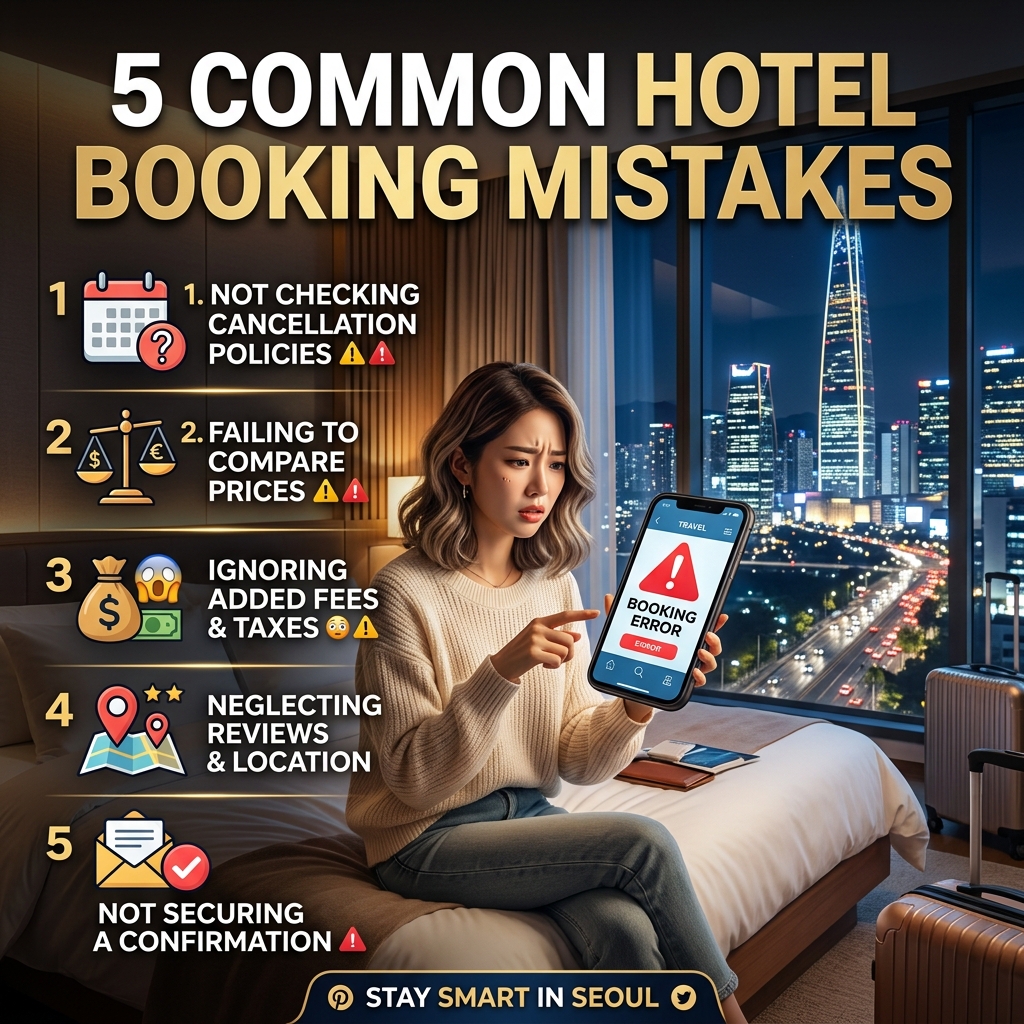
"Securing lodging in a massive metropolitan area like Seoul requires balancing baseline room rates against real transit proximity. Many international travelers look exclusively at attractive room photos or cheap prices without analyzing the property's physical position relative to the local transportation infrastructure. Seoul spans over 600 square kilometers and is split directly down the middle by the Han River. Choosing an isolated or poorly connected base camp can trap you in multi-line subway transfers, draining hours of your limited holiday time and inflating your daily transport expenses."
Geography vs. Transit Proximity in Seoul Accommodation
Securing lodging in a massive metropolitan area like Seoul requires balancing baseline room rates against real transit proximity. Many international travelers look exclusively at attractive room photos or cheap prices without analyzing the property's physical position relative to the local transportation infrastructure.
Seoul spans over 600 square kilometers and is split directly down the middle by the Han River. Choosing an isolated or poorly connected base camp can trap you in multi-line subway transfers, draining hours of your limited holiday time and inflating your daily transport expenses.
1. Choosing a District Base That Conflicts with Your Daily Itinerary
The earliest hotel mistake is selecting a neighborhood that forces excessive travel times to reach your intended sightseeing zones. For example, staying deep inside the northern historical center of Insadong makes sense if your schedule focuses heavily on Joseon-era palaces and traditional tea houses. However, if your actual itinerary centers on modern boutique shopping, K-beauty clinics, and upscale dining in Gangnam, staying north of the river adds a mandatory 40-minute commute to each leg of your journey.
2. Neglecting Subway Line Proximity (The Line 2 Circular Rule)
Many tourists book a hotel simply because the listing notes it sits "near a subway station." However, not all subway lines are equal. Booking a property on a minor, slow-moving commuter line requires executing multiple complex station transfers to reach major commercial hubs.
The best approach is to anchor your lodging within a short walk of Metro Line 2 (the green circular line). Line 2 loops continuously around the entire urban core, connecting Hongdae, Sinchon, Dongdaemun, Jamsil, and Gangnam directly without requiring a single train transfer.
3. Miscalculating Local Value-Added Tax and Hidden Service Charges
When scanning wholesale hotel rates on international booking applications, travelers frequently mistake the initial aggregate figure for the final checkout cost. South Korean hospitality regulations mandate a standard 10% Value-Added Tax (VAT) on commercial room rentals.
Furthermore, mid-range and premium hotels often append an additional 10% internal service charge to the bill. Failing to verify whether these combined 20% surcharges are integrated into the upfront display rate leads to unexpected credit card balances at checkout.
4. Booking Peak Seasonal Windows Without Adequate Lead Time
Seoul experiences severe accommodation spikes during specific peak travel windows. The primary peak periods center on the spring cherry blossom bloom (late March to mid-April) and the autumn foliage peak (October to November).
During these high-demand weeks, standard boutique room rates routinely double or triple in price. Attempting to secure a well-reviewed hotel room less than 60 days before arrival leaves you with poorly rated, overpriced options located far from major transit stations.
5. Using Suboptimal Reservation Platforms Lacking Regional Discounts
Relying on generic Western hotel search tools often leads to overpaying for standard rooms in South Korea. The East Asian hospitality landscape is heavily dominated by specific regional platforms that maintain localized inventory blocks and direct corporate rate agreements.
Systematic price auditing shows that specialized booking applications like Agoda routinely offer flash sales and markdown rates that track 15% to 20% lower than official direct hotel sites or standard international aggregators for mid-range Seoul properties.
Frequently Asked Questions (FAQ)
Q1: Do Seoul hotels require a physical cash security deposit at check-in?
Most mid-range and premium hotels require an international credit card pre-authorization swipe upon checking in to cover potential incidental room charges. If you only hold a cash debit card, the desk may request a physical paper banknote deposit ranging from KRW 50,000 to KRW 100,000 per night.
Q2: What is the standard check-in time enforced across Seoul?
The standard check-in window across traditional city hotels is strictly set between 15:00 PM and 16:00 PM. Arriving early rarely guarantees access to your room asset, though almost all front desks will store your heavy luggage bags in a secure holding area free of charge.
Q3: Are traditional Hanok guesthouses a practical choice for a full-week stay?
Traditional Hanok stays located in Bukchon provide excellent cultural immersion for a 1 or 2-night experience. However, because they often feature thin floor mats instead of elevated mattresses and uphill walking paths, they can introduce physical strain over a longer holiday.
Q4: Can I request a late checkout without incurring an immediate financial penalty?
Standard checkout timing settles strictly at 11:00 AM. While certain properties grant a complimentary 1-hour extension to loyalty tier members, unauthorized delays past noon trigger automatic hourly penalties equal to 10% to 50% of the daily room rate.
Q5: Do mid-range hotels in Myeongdong provide free laundry amenities?
An increasing number of modern boutique brands (such as Travelodge and Nine Tree variants) house self-service coin laundry rooms inside their basements. These facilities require physical KRW 1,000 banknotes or coins to activate the washing and drying machines.
Official Express Transit Passes & Hotel Rates:
Bypass room booking friction and high airport transfer ticket lines. Access regional discounts on top boutique hotels and transit cards in the comment section below.
Book discount hotel rooms and search live transit tickets in the Comment Section below (Official Partner Integration)


Comments
Post a Comment