Seoul Station Hotel Selection: 3 Major Pitfalls That Turn a
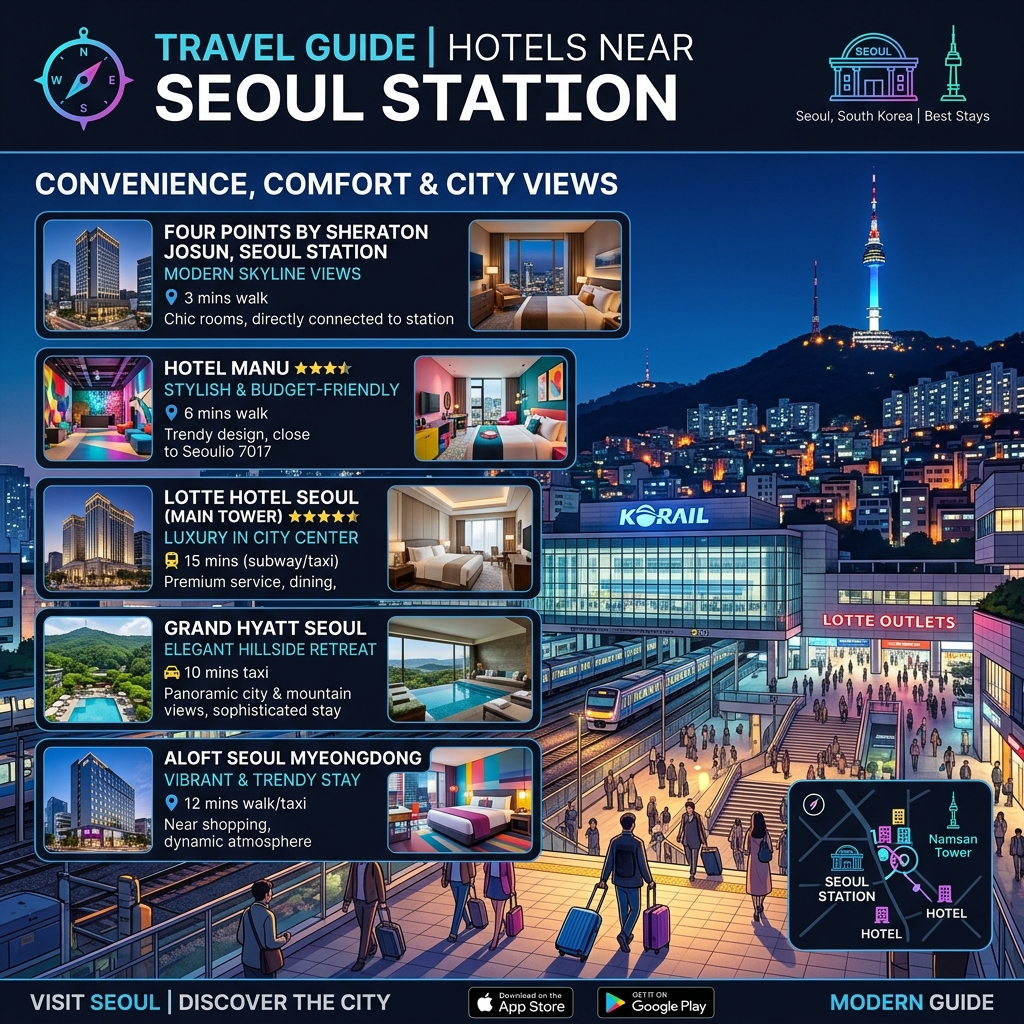
Booking an accommodation flanking Seoul Station seems like the ultimate smart move for incoming international travelers. Because the airport train drops you directly inside this central terminal hub, choosing a nearby room suggests you can walk straight to your lobby within minutes of stepping off the rail platform.
However, this geographical proximity frequently hides severe architectural and structural barriers. If you pick a hotel block without analyzing the station’s massive multi-lane highway grids and underground level dead-ends, your short walk can quickly transform into a grueling physical struggle against broken pavements, steep curbs, and steep inclines.
The Spatial Friction: The Wide Overpass and Plaza Barrier
Seoul Station is structurally split into two completely isolated halves by an immense multi-lane railway line and a heavily congested transit plaza grid.
| Hotel Sector Zone | Physical Access Route from AREX | Luggage Drag Resistance | True Cross-Over Walk Time |
|---|---|---|---|
| Western Huam-dong Blocks | Direct surface sidewalk access via Exit 15 | Low (Flat asphalt and concrete ramps) | 4 to 6 Minutes total |
| Eastern Namdaemun Blocks | Requires crossing the main multi-level train hall | High (Heavy pedestrian commuter waves) | 12 to 18 Minutes total |
| Namsan Foothill Blocks (Exits 10-11) | Steep 12-degree vertical slope path | Extreme (Severe physical muscle strain) | 15+ Minutes with heavy gear |
Many independent guest houses and boutique hotels advertise themselves as being "300 meters from Seoul Station." What their promotional pages omit is that they sit on the eastern side of the tracks, while the AREX airport train terminates at the absolute western edge of the basement complex. Reaching these eastern properties requires hauling your heavy check-in bags across the entire width of the main passenger train concourse, navigating massive crowds of local daily commuters.
Pitfall 1: The Exit 10 & 11 Vertical Incline Trap
The blocks stretching immediately outside Subway Exits 10 and 11 run straight toward the steep foothills of Namsan Mountain. Several highly rated business hotels occupy these slopes.
While the distance looks minimal on flat digital screens, the actual asphalt lanes present a punishing 12-degree vertical incline. Dragging two 23kg rolling suitcases up this broken concrete grade forces your wrists to bear the entire dead weight of the luggage, creating immediate physical exhaustion before you even clear the hotel's revolving entry doors. For example, if you give up and hail a taxi to cover this short slope to avoid the steep hills, it can easily cost you 5,000 KRW (approx. $3.70 USD) for a brief 3-minute ride.
Pitfall 2: The Underground Shopping Labyrinth Dead-Ends
Travelers attempting to escape outdoor weather elements frequently make the mistake of using the extensive underground pedestrian shopping tunnels to reach their hotels. This is a major operational error.
The Staircase Barrier: These older underground pathways are engineered for local foot traffic and are packed with small retail stalls. They routinely lack ramp systems or elevator connections at minor exit points.
The Dead-End Loop: You can easily walk for ten minutes down a narrow subterranean passage only to face a steep flight of thirty concrete steps at your targeted street exit, forcing you to lift your heavy suitcases manually step-by-step.
Pitfall 3: The Highway Center Island Bottleneck
If your chosen accommodation sits across the main Toegye-ro avenue, reaching it via the street surface requires navigating the massive Seoul Station Transfer Center island platforms.
This zone features twelve separate lanes of continuous city bus traffic. The pedestrian crosswalks operate on fast, short signal cycles. Forcing a family with small children and multiple large bags through these tightly timed traffic channels triggers immense mental stress and physical pacing friction.
Selecting Your Flat Safe Zone
To eliminate these arrival day headaches, restrict your accommodation searches strictly to properties positioned on the flat western perimeter of the station near Exit 15, or pick premium high-rises that feature certified, direct basement tunnel connections to the AREX lines. These setups allow you to wheel your bags on completely flat, climate-controlled indoor tile surfaces straight from the train gate to the check-in desk. To review the top pre-verified accommodations flanking these optimal airport transit junctions, checking out direct local lodging reports is highly recommended. Check here to review secure hotel setups.
While choosing a hotel on flat terrain is critical, managing your arrival timeline from the aircraft cabin to the train tracks is the first hurdle. Read our guide on The 30-Minute Incheon to Seoul Station Transit Sprint: A Luggage Handler's Reality Check to optimize your airport transit timeline.
📍 Data verified via official geographic data structures from the Korea Tourism Organization (TourAPI).
🏨 Secure Vetted Hotels via Agoda → Browse Verified Stays (Agoda)
🎫 Book Official Rail passes via Klook → Get Regional Rail Passes (Klook)
⚡ Full affiliate links & booking codes: ↓ See Comment Section below
Essential travel gear recommended for optimal safety and comfort during your journeys.Travel Essentials
Verified Gear
RFID Blocking Travel Neck Wallet
★ 4.9