Myeongdong Hilly Terrain Hotel Regret: Why Map Distance Lies for Heavy Luggage Arrivals
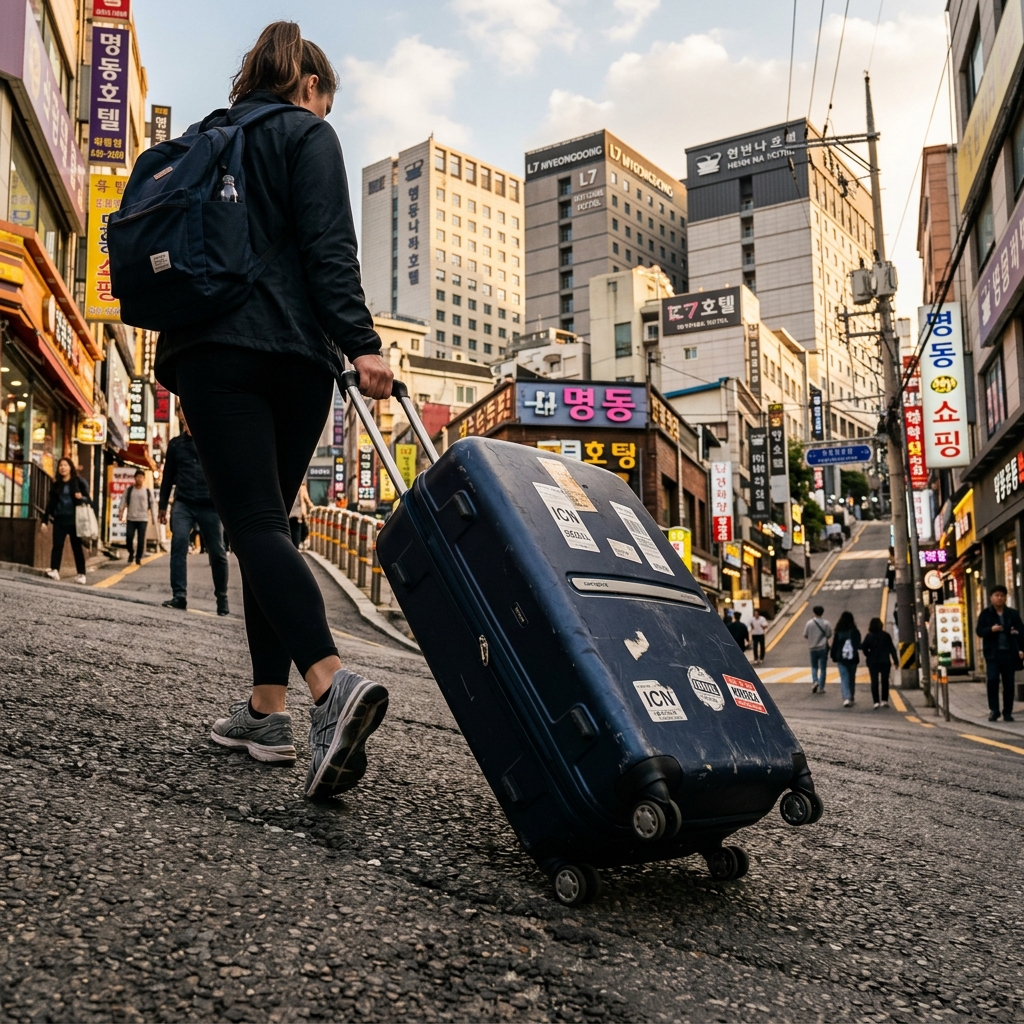
Booking a hotel room in the Myeongdong shopping district is a primary choice for foreign independent tourists. The neighborhood offers dense food stalls, beauty shops, and direct transport links. However, relying purely on 2D map views to evaluate hotel accessibility introduces a major physical hazard. The flat map coordinate shows a short 3-minute walking line from the train exit, but the reality involves a steep 20-degree vertical climb that can damage luggage wheels and exhaust travelers.
The core geographical friction lies on the Namsan mountain side of the district. Myeongdong is split by Toegye-ro road. The northern market side is relatively flat, but the southern hotels flanking Pacific Hotel, Namsan Yejang Park, and the cable car base station sit on a sharp hillside. Travelers dragging heavy bags face physical barriers that map applications do not disclose.
The Terrain Trap: Pacific Hotel and Namsan Slopes
According to pedestrian logs, hotels positioned along Toegye-ro 20-gil and Toegye-ro 22-gil feature steep inclines. The asphalt surface is rough, and the walkways lack flat ramps. Pushing a 20kg suitcase on a 15% to 20% slope creates massive physical drag. Standard small plastic suitcase wheels face high friction, often resulting in cracked bearings or physical fatigue.
| Myeongdong Zone | Walking Path Slope | Elevator/Escalator Availability | Luggage Friction Level |
|---|---|---|---|
| Northern Market Flat Zone | Under 3 degrees (Flat) | High (Subway escalators active) | Low (Smooth paved alleys) |
| Southern Namsan Slope (Exits 2/3) | 15 to 22 degrees (Steep) | None (Staircase exits only) | Severe (Asphalt incline) |
| Lotte Dept Store Side (Exit 7/8) | Under 2 degrees (Flat) | High (Elevators near plaza) | Minimal (Wheel-friendly walkways) |
The exit structures of Myeongdong Subway Station add to this friction. Exits 2 and 3, which serve the southern hillside hotels, contain only steep concrete steps. There are no elevators or escalators. Travelers must carry their luggage up multiple flights of stairs before starting the uphill climb. To bypass this, travelers must use Exit 1 or Exit 10, which have elevators, but this requires crossing busy streets to reach the Namsan-side hotels.
The Real Cost of a Bad Accommodation Layout
Based on comprehensive traveler feedback logs, booking regrets heavily concentrate around these hillside locations. A traveler arriving after a 12-hour flight is forced to climb these steep inclines under humid summer conditions or freezing winter ice. Taking a local taxi is rarely a solution. Standard taxi drivers routinely reject short rides under 1km, which costs around 4,800 KRW (approx. $3.60), due to heavy traffic on Toegye-ro. If you must travel to Namsan Tower from the station, using the official Namsan Yellow Bus 01 for 1,400 KRW (approx. $1.05) is far more practical than carrying heavy luggage up the slopes.
If you have multiple bags or travel with family, booking a flat-terrain hotel on the northern market side is essential. This layout guarantees level pavement from the airport bus stops directly to the hotel lobby. To keep your travel safe, checking verified flat-ground hotel coordinates is recommended. Read this report to verify top Myeongdong hotel accessibility before booking your stay.
🌐 Local Guide Resource Box- 📍 Data verified via official geographic data structures from the Korea Tourism Organization (TourAPI).
- 🏨 Secure Vetted Hotels via Agoda → Browse Verified Stays (Agoda Account 1966640)
- 🎫 Book Official Rail passes via Klook → Get Regional Rail Passes (Klook Account 117966)


🌐 Myeongdong Hilly Terrain Hotel Regret
ReplyDelete☑️ [Verified Stays] Level-ground hotels in central Myeongdong (Agoda)
☑️ [Official Discount] Pre-book airport transfer buses and subway cards (Klook)