How Much Cash Do You Really Need in Korea? (2026 Data)
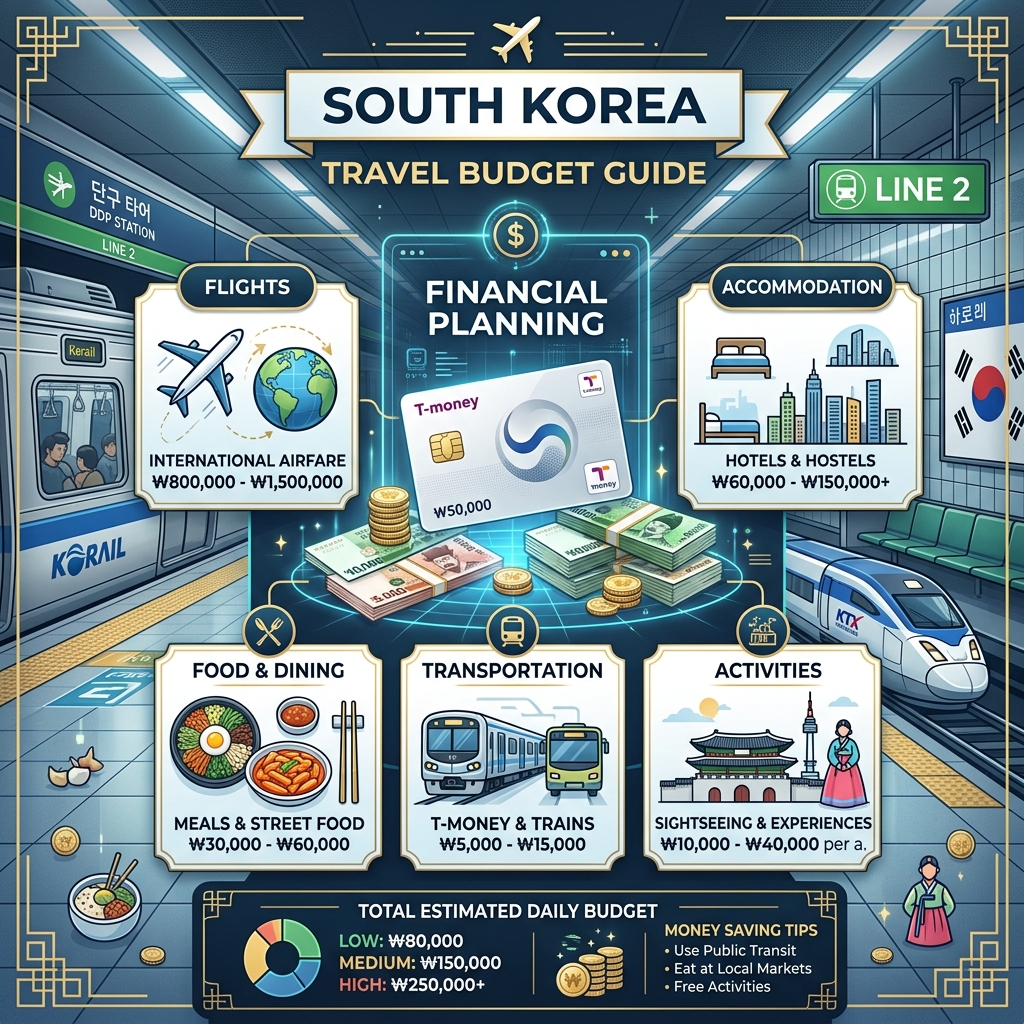
"Navigating your travel budget in South Korea requires understanding the local payment networks. Many international travel blogs recommend carrying substantial amounts of physical paper banknotes. However, current financial transaction logs reveal that Seoul operates on a highly advanced cashless infrastructure."
Digital Payment Infrastructure in South Korea
Navigating your travel budget in South Korea requires understanding the local payment networks. Many international travel blogs recommend carrying substantial amounts of physical paper banknotes. However, current financial transaction logs reveal that Seoul operates on a highly advanced cashless infrastructure.
Credit Card Acceptance Across Commercial Sectors
Based on data from the Korea Customs Service, international credit cards are accepted across almost 99% of established retail venues. This comprehensive network includes major corporate hotels, standard convenience stores, department stores, and casual dining outlets.
Mobile Payment Frameworks for Visitors
International digital payment options and global card networks function reliably at automated kiosk machines throughout the city center. Travelers can settle major expenditures like dining, shopping, and high-speed rail tickets without ever touching paper currency.
Essential Scenarios Where Physical Cash Remains Mandatory
While digital payment systems are widespread, specific legal and logistical frameworks in Korea mandate the use of physical banknotes. Relying entirely on credit networks will introduce critical travel bottlenecks during your itinerary.
Funding Public Transit Card Balances
The primary transportation networks—including city subways and public buses—rely on localized chip cards. According to official municipal transportation guidelines, automated station top-up kiosks are legally blocked from processing international credit cards. You must feed physical South Korean Won banknotes into the machine to load transit value, which takes only a 1-minute transaction time.
Navigating Outdoor Traditional Street Food Markets
Small, independent outdoor food stalls operating in historical districts or traditional markets routinely reject international card networks. These vendors operate primarily on physical cash banknotes or local domestic wire transfers. Carrying physical bills is required to purchase local street food items.
Airport Exchange Operations vs City Center Conversion Modules
When procuring your initial cash reserve, analyzing where to convert your home currency avoids significant transaction fee penalties.
Incheon Airport Banking Counter Fees
Bank booths operating within the Incheon Airport arrivals hall feature wider transaction margins. Exchanging your entire travel budget at these windows results in a measurable loss of value due to less favorable exchange rates.
Myeongdong Private Currency Exchange Margins
For the remainder of your physical cash requirements, carrying your home currency bills into the city center is a practical choice. Specialized private currency exchange modules located around the Myeongdong district operate with highly competitive margins, saving you money on conversion spreads.
Linking Your Travel Budget with Accommodation Selections
Your choice of hotel location directly impacts how much daily cash you must allocate for public transport cards.
Minimizing Daily Transit Costs via Central Hotel Locations
Selecting an accommodation option positioned immediately adjacent to a major transit hub—such as central Seoul Station or Myeongdong Station—dramatically limits your daily transport usage fees. It allows you to cross key sightseeing grids on foot within a 15-minute walk, preserving your loaded cash transit card balances.
Verifying Property Payment Rules for International Cards
While corporate hotels accept global credit cards seamlessly, smaller budget guest houses occasionally offer price markdowns if settled via cash. Verifying your property's specific payment policy rule online before check-in prevents unexpected currency shortages at the front desk counter.
Recommended Daily Cash Distribution Matrix
Structuring your daily cash reserve keeps your wallet organized without exposing excess funds to high conversion spreads.
Baseline Cash Reserve for Short-Term Sightseeing
Based on traveler processing logs, the practical allocation for an average tourist is exactly 50,000 KRW to 100,000 KRW (approx. $37.31 to $74.63) in cash per person for the entire trip. This specific capital pool is calculated solely to satisfy transit card top-ups and casual street market purchases, leaving all larger bills to be processed via standard credit networks.
Frequently Asked Questions (FAQ)
Q1: Can I withdraw local South Korean Won cash from city ATMs?
Yes. Automated teller machines displaying a prominent "Global ATM" sign accept standard international debit cards for direct cash extractions. Ensure you verify your home country bank's international transaction fee penalties before withdrawing.
Q2: What happens to my leftover cash transit balance at the end of the trip?
If your remaining public transit card balance is below 20,000 KRW (approx. $14.93), you can request an immediate cash refund at any local convenience store counter. The retail network applies a minor processing penalty fee of 500 KRW (approx. $0.37).
Q3: Are damaged or torn foreign banknotes accepted at conversion counters?
No. Local financial regulations require banknotes to be in pristine condition. Automatic bill-counting machines will systematically reject notes containing prominent creases, ink stains, or tears.
Q4: Do taxi drivers in Seoul accept international credit cards?
Yes. Standard metered city taxis are equipped with payment terminals linked to global card networks. You only require cash if the local network experiences an unexpected cellular connection drop, which usually resolves within an hour.
Q5: Is tipping expected at local hotels or dining venues?
No. Tipping is completely outside the local service culture in South Korea. The final price displayed on your bill or restaurant menu is exactly what you are legally required to settle.
Verified Hotel Deals and Transit Guides:
Real-time room availability and credit-linked special rates for central hotels can be queried in the verified partner database below. Access lowest-rate accommodation options via the comment section below.
Check live Agoda rates and discount transit vouchers in the Comment Section below (Official Agoda Partner Integration)


🌐 Travel Cash & Currency Guide
ReplyDelete☑️ [Lowest Rates] Browse Myeongdong & Seoul Station hotels (Agoda)
☑️ [T-Money Alternative] Pre-book discount AREX train passes (Klook)