Korea Dermatology Trip 2026: 7 Travel Logistics to Plan Before Treatment
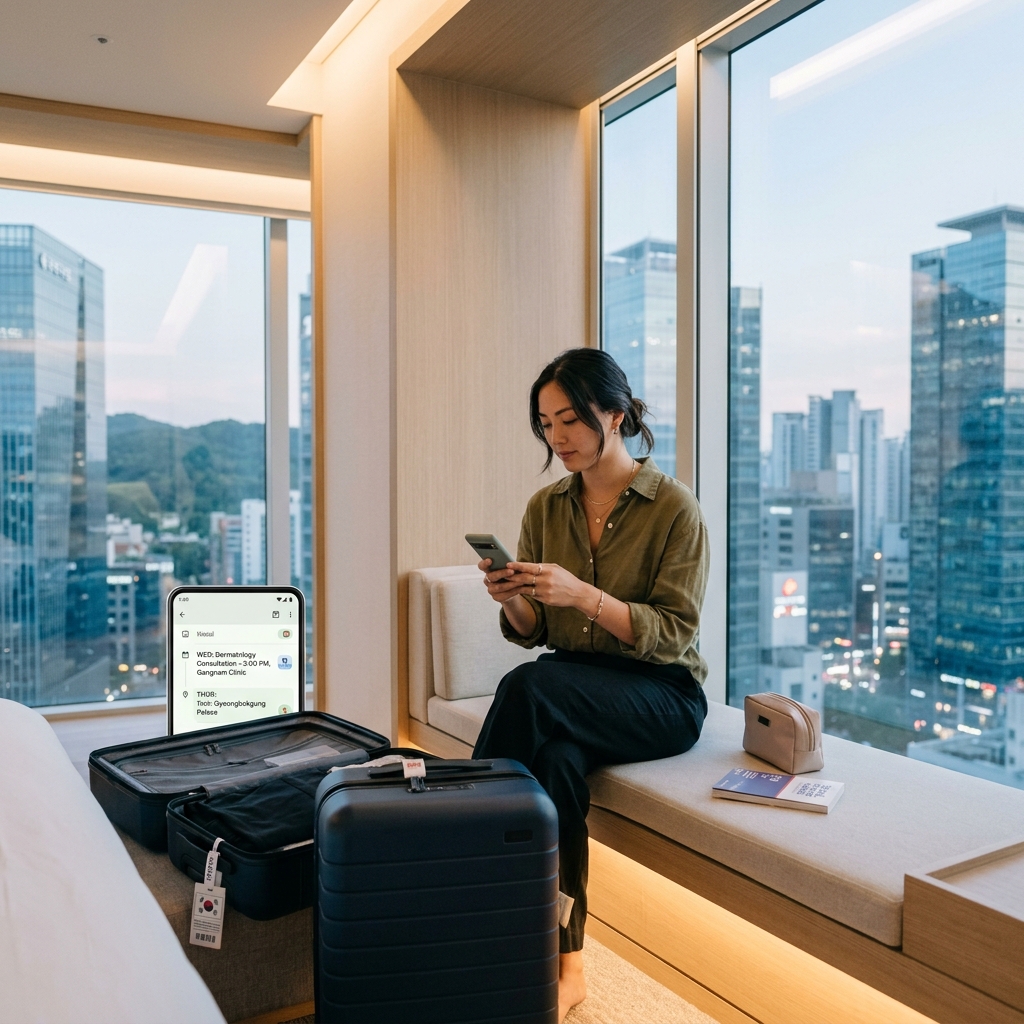
Korea Dermatology Trip 2026: 7 Travel Logistics to Plan Before Treatment
1. Travel Logistics Define the Success of a Dermatology Trip
Traveling to South Korea for dermatological treatments—such as fractional lasers, skin booster injections, pigmentation removal, or clinical skincare—involves far more than securing an appointment time. Medical procedures create immediate physical vulnerabilities: post-treatment skin is temporarily red, sensitive to ambient sunlight, vulnerable to environmental dust, and reactive to physical heat. Navigating long transit transfers across multistory subway stations or carrying heavy shopping bags directly increases swelling and discomfort. Successfully organizing a skincare trip requires building your travel logistics around your appointment schedule rather than attempting to fit clinic visits into a standard tourist itinerary. For an analysis of foreign patient demand and clinic specialization trends, review our market data report: Korea Medical Tourism Statistics: Foreign Patients and Dermatology Demand.
2. The 7 Essential Travel Logistics to Plan in Advance
- Airport-to-Hotel Arrival Buffer: Schedule your clinical consultation for at least 24 hours after your international flight touches down. Long-haul transpacific flights cause fluid retention, dehydration, and systemic fatigue that can affect skin barrier assessment. Arrive, rest in your hotel overnight, and attend your consultation refreshed.
- Clinic Proximity & Walking Burden: Choose accommodation located within a flat, 5-to-7-minute walk of your primary clinic corridor in Gangnam, Sinnonhyeon, or Sinsa. Eliminating the need to take crowded public subways or search for street taxis with red, post-treatment skin preserves comfort and privacy.
- Treatment-Day Transportation: If your hotel is not within immediate walking distance, pre-arrange your return transport. Hailing street taxis along Gangnam-daero during peak afternoon hours can take 20 to 30 minutes, leaving treated skin exposed to outdoor sunlight and exhaust fumes.
- In-Room Hotel Recovery Infrastructure: Verify that your hotel room includes a dependable mini-refrigerator (for chilling prescribed soothing sheet masks and medical cooling packs), effective blackout blinds, and elevator access. Avoid walk-up guesthouses.
- Pharmacy & Post-Care Supply Access: Confirm that your hotel is located within 200 meters of a licensed community pharmacy (). Prescribed topical barrier ointments, hydrocolloid dressings, and sterile saline must be acquired promptly following your procedure.
- Departure-Day Recovery Buffer: Never schedule intensive laser resurfacing on the morning of your departure flight. Cabin air on long-haul aircraft is exceptionally dry (humidity often under 15%), which severely desiccates freshly treated skin. Allow at least 48 to 72 hours between intensive procedures and your international flight home.
- VAT Refund Documentation Management: Certified medical and aesthetic clinics in South Korea provide Value Added Tax (VAT) refund certificates for eligible foreign visitors. Keep all original treatment receipts, credit card slips, and tax forms in a dedicated carry-on folder to process your 7% to 8% tax rebate at Incheon Airport customs before checking in.
3. Decision Framework: Appointment Schedule vs. Itinerary Design
| Trip Stage | Travel Logistic Priority | Operational Goal |
|---|---|---|
| Day 1 (Arrival) | Direct airport transfer to hotel; early sleep | Eliminates flight dehydration; restores skin equilibrium. |
| Day 2 (Treatment Day) | Flat walking route from hotel to clinic; pharmacy visit | Minimizes sun exposure and physical strain post-procedure. |
| Day 3–4 (Rest / Aftercare) | In-room recovery with mini-fridge masks; low-intensity dining | Ensures uninterrupted healing away from heat and heavy crowds. |
| Day 5+ (Departure) | Direct door-to-door airport vehicle; VAT refund processing | Smooth terminal check-in; cash tax rebate recovery at customs. |
4. Summary & Action Steps
A successful dermatology trip to Seoul depends as much on your travel infrastructure as on your clinical treatment. Select accommodation located within walking distance of your clinic, avoid scheduling treatments immediately before flights, and maintain a quiet, well-serviced recovery space.
Skincare Travel & Recovery Travel Essentials
Equip yourself with practical accessories designed for skincare travel logistics.
- UPF Sun Hat & Sunglasses: Protects freshly treated facial skin from UV rays when walking between clinics.
- Moisture-Proof Pill Organizer: Keeps prescribed post-care supplements and anti-inflammatory tablets organized.
- Travel Document Pouch: Safely stores clinic invoices, appointment confirmations, and VAT tax refund receipts.
Clinic-Proximity Hotel Reservation: Prioritize physical rest and easy appointment access by comparing hotels located within a 5-minute walk of Gangnam and Sinsa clinics on Agoda.
Post-Procedure Airport Transfer: Avoid crowded subways and protect sensitive skin after treatment by pre-booking a direct, flat-rate private airport transfer on KiwiTaxi.
Travel Essentials Comparison: Compare travel organizers, sun protection gear, and document wallets on Amazon before departure.
Recommended Medical Travel & Lodging Guides
- Korea Medical Tourism Statistics: Foreign Patients and Dermatology Demand
- How to Choose a Seoul Hotel After Medical Treatment
- Seoul Medical Tourism Cost 2026 Breakdown
- Dermatology Clinic Recovery Hotels Directory
- Korea Medical Tourism & Skincare Recovery Directory
- Incheon Airport Express & Bus Cost Database
💳 Explore KTX rail passes, travel deals & passes on Klook.
Klook Official Partner Link