Seoul Subway Transfer Traps: The 3 Worst Stations for Heavy
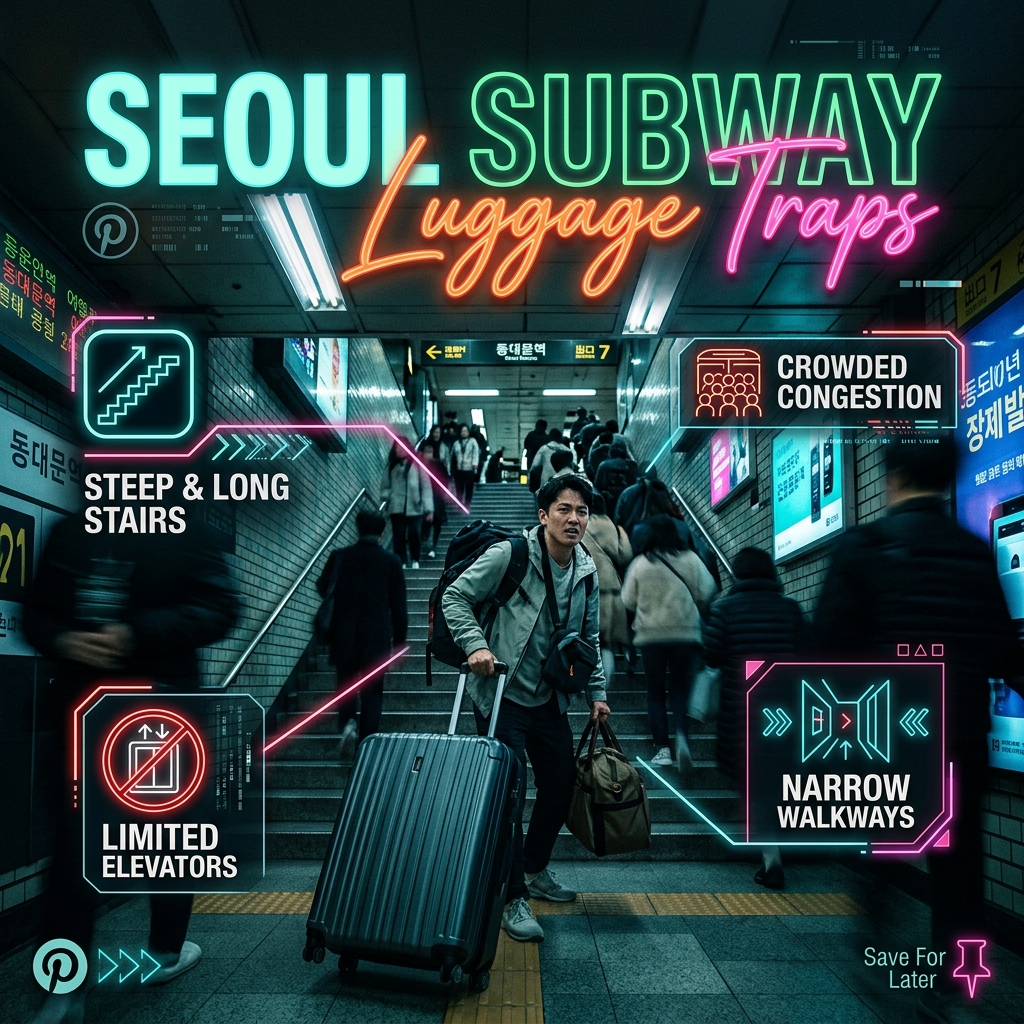
Navigating Seoul’s subway layout is incredibly efficient until you need to switch lines while pulling multiple 23kg suitcases. Digital mapping applications display standard transfer markers as simple, seamless dots connecting different lines under one roof.
In reality, certain structural intersections across the capital hide massive walking gaps, steep staircases, and crowded pedestrian bottlenecks. Walking blindly into these transfer networks with large travel bags drains your physical stamina and heavily disrupts your travel schedule.
The Real Transfer Distance and Step Matrix
Based on municipal infrastructure measurements and daily commuter complaints, here is the baseline friction reality for Seoul's three most challenging transfer intersections.
| Subway Transfer Hub | Connecting Lines | Average Transfer Walk Time | Primary Physical Friction Point | Best Avoidance Tactic |
|---|---|---|---|---|
| Dongdaemun History & Culture Park | Line 2 to Line 5 | 8 to 12 Minutes | Massive 300-meter underground walking tunnel with broken escalator blocks | Exit to street level and use flat sidewalks for short distances |
| Express Bus Terminal | Line 3 to Line 9 | 10 Minutes | Extreme depth gap requiring three separate deep escalator banks | Prioritize surface taxi lines if moving with small children |
| Seoul Station | Line 4 to AREX Line | 12 to 15 Minutes | Immense vertical distance, deep labyrinth, multiple ticket turnstiles | Use dedicated luggage lifts instead of standard stair escalators |
Hub 1: The Dongdaemun Line 2 to Line 5 Tunnel Gauntlet
Dongdaemun History & Culture Park Station serves as a central junction for shopping tourists. Switching from the green Line 2 loop to the purple Line 5 route looks brief on a schematic chart.
The physical reality is an incredibly long underground walking path stretching nearly 300 meters. The tunnel features subtle inclines and frequent maintenance blocks that deactivate the mechanical moving walkways. If you are hauling heavy fashion purchases or large luggage units, this single walk feels like a prolonged workout inside a dense, humid commuter stream.
Hub 2: The Express Bus Terminal Vertical Depth Trap
Express Bus Terminal Station handles an immense volume of local transit traffic. Transferring from the old Line 3 platforms to the modern deep-level Line 9 express tracks introduces massive vertical friction.
The depth gap requires navigating three separate, steep escalator tiers. During peak afternoon commute hours, these metallic lanes saturate completely with local office workers. If you accidentally lose your grip on a rolling suitcase at the top of these long descents, it creates an immediate safety hazard for hundreds of standing passengers below.
Hub 3: The Seoul Station Underground Labyrinth
The physical transfer pathway linking the deep underground AREX airport rail platforms to the main Subway Line 4 tracks inside Seoul Station is notorious for causing transit exhaustion. The route involves passing through multiple internal ticketing gates, climbing extensive concrete steps, and tracking ambiguous directional signs.
The Hidden Step Count: Certain backup pathways along this transfer line contain up to forty continuous stone steps without parallel ramp structures.
The Commuter Rush: Forcing your way through this narrow concrete funnel while dragging wide bags during the 08:00 weekday rush hour triggers intense physical friction with fast-moving local workers.
Survival Rules for Luggage Handlers
If your daily itinerary requires crossing through these three bottleneck hubs with major travel gear, completely abandon your transit apps' automated routing. Instead, exit the station turnstiles entirely at your first stop, hail a standard local taxi at street level (which typically costs around 10,000 KRW to 15,000 KRW, approx. $7.40 to $11.10 USD for short inner-city routes), and ride on flat ground directly to your destination neighborhood.
For travelers looking to secure their central hotel bases near flat, accessible subway exits with zero staircase traps, checking out direct local accommodation options is highly advised. Check here to review certified accessible hotel zones before finalizing your booking.
Once you bypass the subway luggage staircases, you can load your transit pass using home credit cards at local kiosks. Make sure to review the 2026 pricing updates and the strict tag-off rules. Read our Seoul Climate Card 2026 Tourist Cheat Sheet & Kiosk Guide to plan your local subway pacing.
📍 Data sourced from Korea Tourism Organization (TourAPI) & Seoul Metropolitan Government official records.
🏨 Secure Vetted Hotels via Agoda → Browse Verified Stays (Agoda)
🎫 Book AREX & Activity Passes via Klook → Get Discounted Passes (Klook)
⚡ Full affiliate links & booking codes: ↓ See Comment Section below
Essential travel gear recommended for optimal safety and comfort during your journeys.Travel Essentials
Verified Gear
RFID Blocking Travel Neck Wallet
★ 4.9