Korea Airport Taxi vs Uber vs Kakao T (2026 Cost Guide)
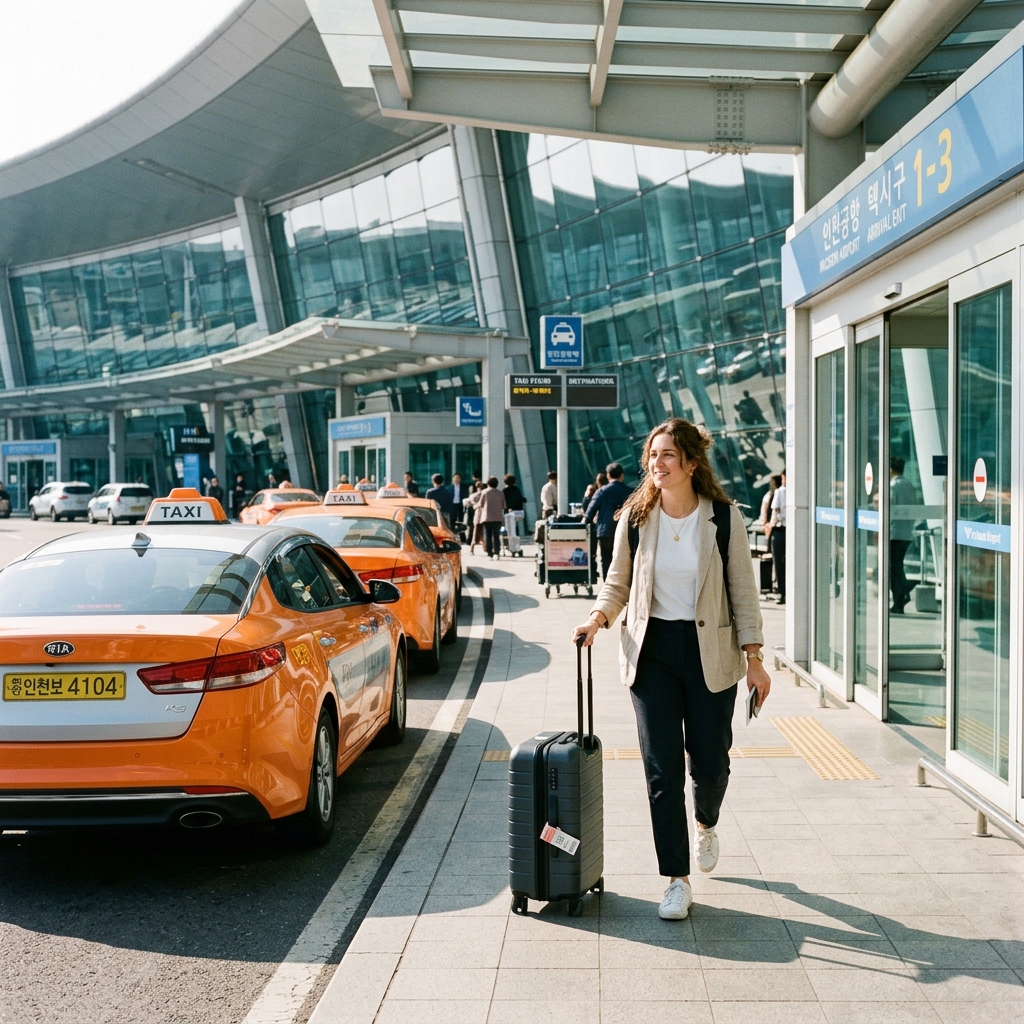
"Navigating the complex transportation options at Incheon Airport is the first step in planning your Seoul journey. Choosing the right taxi or ride-hailing service directly impacts your travel budget and comfort index."
Stepping out of the immigration checkpoints at Incheon International Airport (ICN) immediately introduces your primary logistical choice: securing private terminal transit into the central Seoul metropolitan area. Independent travelers carrying oversized checked luggage or moving in family groups frequently choose private vehicle hailing over rail tracks to bypass the physical strain of multi-level station staircases. The [HeroHaunt] research team has vetted these options to save you time and money.
However, navigating the domestic taxi grid requires isolating the cost and operational discrepancies between standard curb taxis, international software like Uber, and localized applications like Kakao T.
Technical Performance Breakdown of Available Hailing Platforms
Different mobility instruments deliver distinct outcomes across pricing predictability, queue waiting periods, and language barriers.
1. Traditional Walk-Up Curb Taxis
Official airport terminal layouts route passengers directly to designated outdoor loading platforms (Stops 5C through 8C at Terminal 1). These vehicles operate on standard government-regulated taxi meters. While highly reliable, walk-up curbs introduce communication gaps, as individual drivers do not always possess fluent multi-lingual translation assets.
2. The Localized Kakao T Network
Kakao T functions as the dominant mobility app in South Korea, commanding over 90% of active municipal vehicles. It maps out precise pickup coordinates and provides direct access to the largest fleet of general sedans, luxury black vehicles, and high-roof multi-passenger vans (Venti).
3. The International Uber Interface (UT Link)
For foreign travelers, Uber operates seamlessly inside Korea through an international roaming alliance with the local UT system. The primary benefit is absolute convenience: your smartphone interface remains entirely in English, your pre-linked international credit cards process payments automatically, and your home profile data carries over with zero local verification requirements.
Quantitative Cost Allocations: ICN Terminal to Central Seoul Nodes
The table below logs the estimated face-value tariff metrics for a standard one-way sedan trip into central tourism grids under normal daytime operations. Our [Internal Recommendation] is to review these pricing rows carefully to avoid unofficial flat-rate overcharges.
| Transportation Asset Type | Starting Base Fare | Average Cost (ICN → Myeongdong) | Highway Expressway Toll Charges | Payment Clearance Channel |
|---|---|---|---|---|
| Standard Curb Sedan | KRW 4,800 | KRW 55,000 - 68,000 | KRW 6,600 (Appended) | Cash, Credit Card, T-Money |
| Kakao T (General) | KRW 4,800 | KRW 55,000 - 68,000 | KRW 6,600 (Appended) | Driver-Direct Card or Cash |
| Uber / UT International | KRW 4,800 | KRW 57,000 - 72,000 | KRW 6,600 (Automated) | Linked Global Credit Card |
| Premium Luxury / Venti | KRW 7,000 | KRW 95,000 - 130,000 | KRW 6,600 (Automated) | App Auto-Pay or Driver Card |
Bypassing Local Application Payment Surcharge Restrictions
Understanding app payment loops is critical to securing your vehicle on site.
Here is a verified [HeroHaunt Tip] (HeroHaunt Tip #101): When summoning a ride via Kakao T using an international credit card, you must select the "Pay to the Driver" option by swiping left at checkout. The app's auto-payment vault is restricted to local Korean bank cards, but selecting driver-direct payment allows you to hand any global Visa or Mastercard straight to the driver at your destination.
Arrival Logistics Coordination and Hub Optimization
Aligning your pickup zone with your final hotel location is a key part of our [HeroHaunt Korea Guide] for transport planning.
Building a flawless arrival strategy requires balancing your private vehicle budget against alternative ultra-high-speed transit lines. If you are headed to hotels without direct subway connections, private taxis offer the best door-to-door comfort.
For more logistics options, consult our [Related Guide]: Review our comprehensive Best Korea Airport Limousine Bus Guide (ICN → Seoul Hotels) to discover how direct premium coach routes can drop you straight at your hotel curb for a flat fraction of private vehicle tariffs.
Frequently Asked Questions (FAQ)
Q1: Are taxi drivers at Incheon Airport allowed to quote fixed flat rates?
No. National transit enforcement codes state that all standard airport taxis moving toward Seoul must utilize the electronic distance meter. Any driver soliciting a fixed unmetered tariff inside the arrival lounge is operating outside regulations.
Q2: How are highway expressway toll fees processed at checkout?
All vehicle routes exiting the airport island pass across major expressways that levy a mandatory KRW 6,600 toll. The vehicle's automated onboard device scans the toll gate, and the driver appends this exact KRW 6,600 surcharge to your final meter balance.
Q3: What is the maximum luggage capacity for a standard general sedan?
Standard sedan trunks are optimized to hold up to two large checked suitcases (23kg variants) along with minor soft carry-ons. If your travel party carries three or more large cases, you must summon a premium high-roof "Venti" van.
Q4: Does the late-night surcharge apply to airport taxi pick-ups?
Yes. If your vehicle clears the terminal gates during the midnight window (23:00 PM to 04:00 AM), the automated municipal meter applies a 20% to 40% late-night surcharge layer directly onto the distance calculations.
Q5: Can I use pre-paid travel transport cards to pay my taxi fare?
Yes. All authorized municipal taxis house electronic terminal dashboards that accept instant taps from funded T-Money or WOWPASS cards alongside regular plastic credit networks.
공항 수령 대기선의 소모적인 동선 마찰을 전면 우회하고 모바일로 즉시 교부받는 공인 고속 철도 교통권 및 최적 입지의 역세권 숙소 데이터베이스는 아래 장부에서 직접 확인이 가능합니다.
인천공항 초고속 공항철도 AREX 대기 없는 모바일 QR 탑승권 최저가 즉시 발급 (클룩 공식 파트너 연동창)
서울 주요 지하철역 대중교통 거점 주변 추천 호텔 실시간 특가 요금제 조회 (아고다 공식 회원 연동창)


Comments
Post a Comment