How to Avoid Foreign Card Fees in Korea: The Smart Traveler Guide
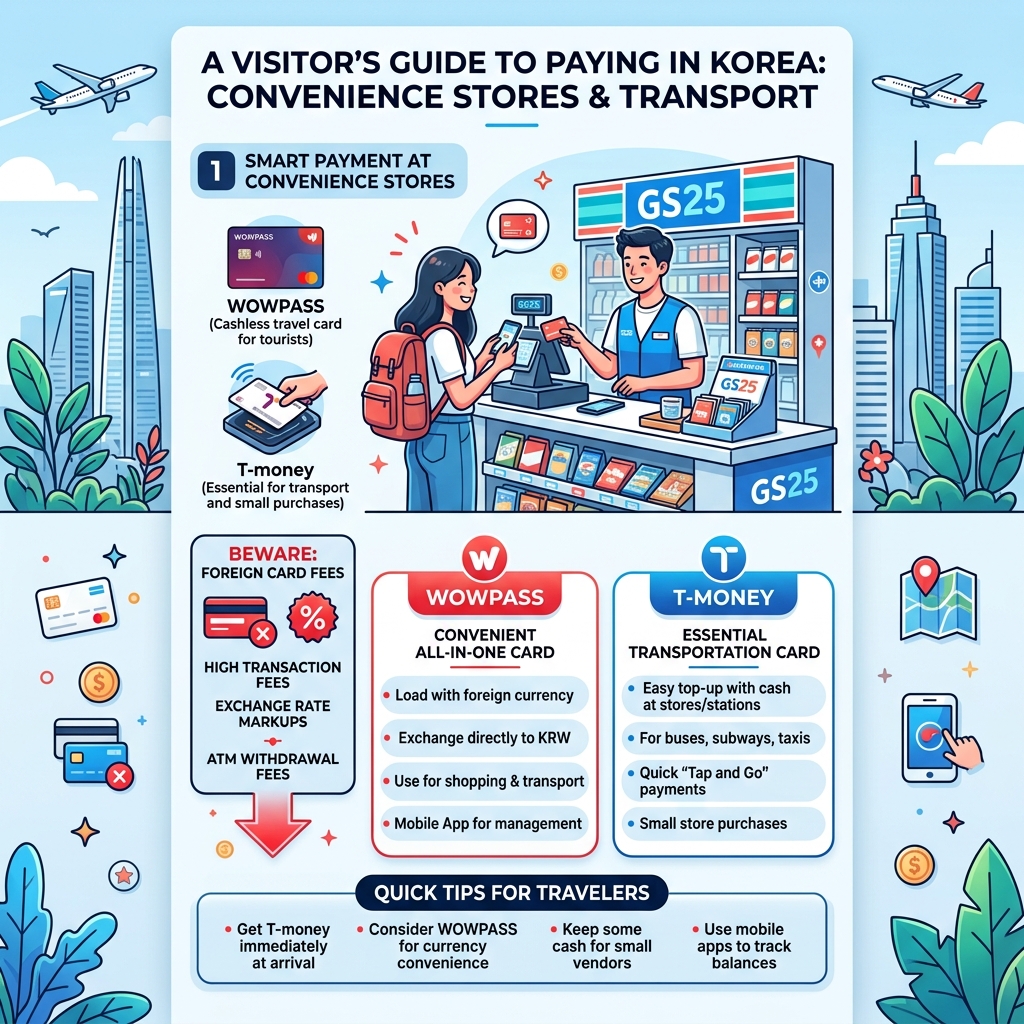
"Navigating your travel budget in South Korea requires tracking how local terminal hardware processes international financial instruments. Seoul operates on a highly advanced cashless network where digital payments are standard. However, international visitors frequently encounter unexpected processing surcharges when tapping foreign credit or debit cards at local point-of-sale terminals. Understanding the mechanics of these transaction fees prevents capital loss and ensures your travel funds are distributed efficiently across your itinerary."
Overview of Merchant Payment Networks in Seoul
Navigating your travel budget in South Korea requires tracking how local terminal hardware processes international financial instruments. Seoul operates on a highly advanced cashless network where digital payments are standard. However, international visitors frequently encounter unexpected processing surcharges when tapping foreign credit or debit cards at local point-of-sale terminals.
Understanding the mechanics of these transaction fees prevents capital loss and ensures your travel funds are distributed efficiently across your itinerary.
Credit Card Acceptance Across Commercial Sectors
International Network Terminal Gateways
Based on commercial transaction tracking registries, global card networks are integrated into almost 99% of established local venues. This wide network includes corporate hotels, retail shopping centers, standard convenience stores, and casual dining spots. Payment processing is immediate, but the net cost of the transaction depends heavily on backend processing rules.
Local merchant card terminals route international transactions through global clearance gateways like Visa, Mastercard, or American Express. While the physical interaction takes only a second, the localized terminal configurations can trigger automatic currency conversion layers if the user profile is not configured correctly.
Direct Foreign Transaction Fee Mechanisms
Primary Issuer Assessment Surcharges
Every time an international card is utilized inside South Korea, the transaction undergoes a multi-layered financial evaluation. These separate fee components combine to increase the net cost of your retail purchases.
Your home country banking institution applies a standardized foreign transaction assessment fee. This surcharge typically ranges from 1% to 3% of the total purchase volume. This fee is enforced directly by your home bank layout and is separate from any local network tariffs applied inside Korea.
Local Processor Conversion Markups
When a foreign card interacts with a local payment gateway, secondary processing entities can apply localized conversion spreads. These backend administrative handling charges increase the total Won valuation converted back into your domestic currency.
Mechanics of Dynamic Currency Conversion Errors
The Local Currency Settlement Rule
The most common financial mistake made by international tourists is falling into the Dynamic Currency Conversion (DCC) trap at retail checkout counters.
When an automated payment terminal detects an international card, the screen layout will frequently prompt the user to choose between settling the bill in South Korean Won (KRW) or their home currency (such as USD, EUR, or GPD). The practical rule for saving money is to always select South Korean Won. Settling in local currency forces your home bank to handle the exchange rate calculation under regulated competitive parameters.
Retail Point of Sale Terminal Traps
Selecting your home currency on a local terminal activates Dynamic Currency Conversion. This software layer permits the merchant's local acquiring bank to set an arbitrary, less favorable exchange rate on the spot. This processing error routinely adds a hidden markup penalty of 4% to 8% to a single dining or shopping bill.
Alternative Prepaid Financial Instruments for Tourists
Custom Prepaid Card Features and All-in-One Systems
To completely bypass issuer siphoning and terminal conversion markups, utilizing localized custom payment tools resolves major arrival friction.
Prepaid travel cards configured specifically for international visitors—such as the orange WOWPASS card—allow travelers to load foreign currency cash directly into automated terminal kiosks. The machine updates the balance using tight exchange spreads and issues a localized corporate card asset that functions exactly like a domestic Korean credit card, dropping foreign transaction fees to zero.
Local Closed-Loop Transit Card Funding Constraints
While custom prepaid cards handle standard retail shopping smoothly, public transportation grids function on a completely separate closed-loop tracking network. Traditional T-money cards and integrated transport chips must be fed using physical cash banknotes at automated subway station kiosks, which takes only a 1-minute transaction time, as global credit networks are systematically blocked at transit turnstiles.
Maximizing Currency Efficiency via Hotel Placements
Verifying Property Payment System Rules
Your choice of accommodation base camp plays a direct role in how often you must trigger foreign card processing fees or cash extraction siphons.
While major international hotel chains settle bills using global corporate network systems, smaller boutique properties or traditional guest houses can apply separate surcharges for international card swipes. Verifying your property's specific payment policy rules online before check-in prevents sudden processing surprises at the front counter.
Minimizing Daily Cash Outlay Triggers
By anchoring your hotel stay immediately adjacent to central transportation nodes like Myeongdong Station or Seoul Station, you minimize the need to constantly reload your public transport card. Crossing major sightseeing grids on foot preserves your cash reserves and limits your interactions with high-fee local ATMs.
Frequently Asked Questions (FAQ)
Q1: Why did my credit card bill show a higher amount than the shop receipt in Seoul?
This discrepancy occurs because your home country bank applied an international transaction assessment fee (typically 1% to 3%) or the local point-of-sale terminal executed a Dynamic Currency Conversion markup penalty during the transaction.
Q2: Is it safer to pay in my home currency if a Korean terminal offers the choice?
No. It is never safer or cheaper. Always select South Korean Won (KRW) on the terminal layout. Choosing your home currency triggers a Dynamic Currency Conversion layer that applies a hidden markup fee ranging from 4% to 8%.
Q3: Do local convenience stores charge an extra fee for international cards?
No. Major authorized convenience store chains process international cards at standard face value. Any extra fees appearing on your statement are applied exclusively by your home card issuer or global clearing gateways.
Q4: Can I use mobile contactless wallets to avoid foreign transaction fees?
Utilizing Apple Pay or Google Pay at compatible local merchant terminals is highly convenient, but the underlying transaction is still processed through your linked international card profile, subjecting the volume to standard home bank foreign transaction rules.
Q5: How do I check if my card will work without fees before traveling to Korea?
You must review the explicit account disclosures or contact the service desk of your home card issuer. Request clear data regarding their "foreign transaction fee" parameters to verify if they offer zero-fee international spending.
Travel Essentials
Verified GearVINTAR 35.5W International Power Adapter
★ 5.0Essential travel gear recommended for optimal safety and comfort during your journeys.
6 Pack US to Europe Plug Adapter - Type C (White)
★ 4.9Essential travel gear recommended for optimal safety and comfort during your journeys.
BESTEK 220v to 110v Converter with USB C 35w
★ 4.8Essential travel gear recommended for optimal safety and comfort during your journeys.
HANYCONY Type E F Plug Adapter
★ 4.8Essential travel gear recommended for optimal safety and comfort during your journeys.
Verified Card Fee Mitigation & Best Accommodations:
You can check the real-time availability of budget-friendly hotels in Myeongdong and downtown transit hubs to avoid foreign card fees through the comment section below.
Check live hotel booking options and discount vouchers in the Comment Section below (Official Partner Integration)