How Much Money Should You Bring to Korea in Summer 2026?
How Much Money Should You Bring to Korea in Summer 2026?
The True Cost of Traveling During peak Summer Waves
Planning a mid-year holiday to South Korea requires updating your travel spending sheets. Summer entry conditions introducing high humidity, frequent monsoon rain columns, and persistent heat change your daily spending habits. Many traditional financial guides provide generic yearly metrics that fail to account for the unique retail costs linked to seasonal behavior.
According to passenger logs and local retail charts, your daily spending paths shift significantly toward climate-controlled transportation, frequent hydration adjustments, and premium indoor shopping sanctuaries.
Seasonal Expense Drivers: Cooling, Hydration, and Café Rest Stops
Managing your summer travel budget centers primarily on small, frequent micro-transactions that add up quickly under high temperatures.
The True Cost of Continuous Hydration
During peak summer heat waves, walking between outdoor historic nodes requires constant fluid replacement. Standard convenience store bottled water ranges from KRW 1,000 to KRW 1,500 (approx. $0.65 to $0.98), but specialized electrolyte drinks and iced tea packs with ice cups average KRW 2,500 to KRW 3,800 (approx. $1.63 to $2.48). A single travel party can easily accumulate an unexpected KRW 15,000 (approx. $9.77) per day purely on convenience fluid checkouts.
Café Air-Conditioning Rest Pitstops
The café culture of Seoul operates as an essential infrastructure asset for heat mitigation. Ducking into a specialty espresso bar or a local brand branch (like Mega Coffee or Ediya) to access high-power cooling ventilation grids is a standard daily routine. With signature iced lattes and fruit smoothies tracking at KRW 4,000 to KRW 7,500 (approx. $2.60 to $4.88) per cup, allocating separate café funding columns is required to protect your main food reserves.
Transport Optimization and Indoor Shopping Allocations
Bypassing High Heat via Premium Metered Taxis
While the subterranean subway platforms house functional ventilation units, the physical effort of walking across multi-level concrete transfer pathways in high humidity drives many travelers to use surface metered taxis. Short-distance taxi runs tracking between 3 to 5 kilometers average KRW 6,000 to KRW 12,000 (approx. $3.90 to $7.80), which provides immediate climate relief but scales up your daily transit outlays compared to standard pay-as-you-go train passes.
Multi-Level Indoor Shopping Malls
To avoid afternoon heavy downpours during the monsoon weeks, sightseeing schedules shift heavily toward indoor retail complexes like COEX Mall in Samseong-dong or The Hyundai Seoul in Yeouido. These massive subterranean centers feature integrated dining rows, fashion boutique galleries, and cultural installations. Navigating these climate-controlled centers removes weather risk but naturally elevates your overall souvenir and fashion retail expenditure metrics.
Practical Cash Requirements for Seasonal Transactions
While over 99% of established brick-and-mortar storefronts clear global credit network swipes seamlessly, carrying a minor reserve of physical paper bills remains mandatory.
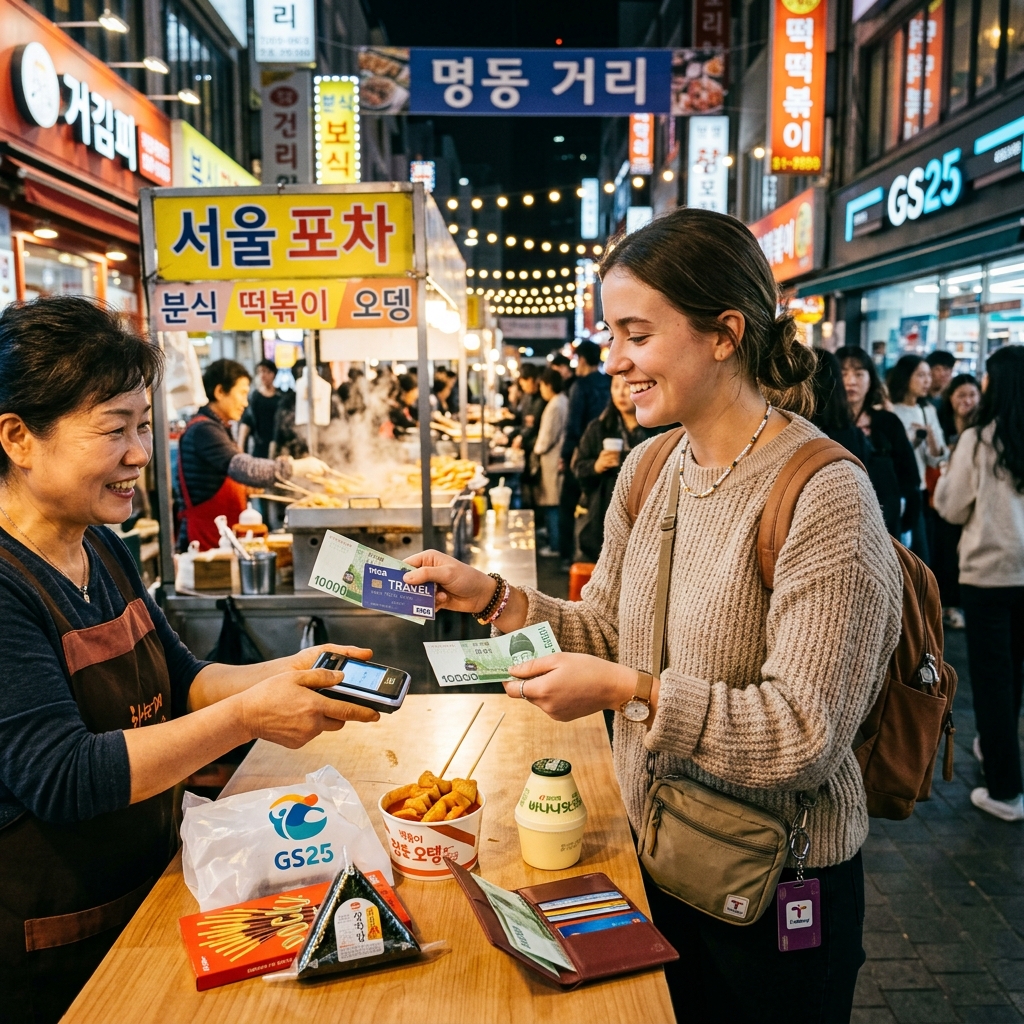
Based on automated merchant registries, independent outdoor stalls inside traditional night markets prefer physical paper banknotes for small items under KRW 10,000 (approx. $6.50). Furthermore, reloading physical T-Money transit cards or custom travel cards at automated train station kiosks strictly rejects foreign credit lines. Keeping a basic allocation of KRW 80,000 to KRW 120,000 (approx. $52.00 to $78.00) in physical cash banknotes per passenger fully protects your initial travel loops, leaving all large-scale hotel and boutique bills to be handled digitally.
Frequently Asked Questions (FAQ)
Q1: Do hotels apply separate utility or cooling surcharges during summer?
No. Standard room contracts include unlimited access to the property's central air-conditioning systems. There are zero hidden cooling fees or energy surcharges appended to your final hotel register at checkout, provided you book via official corporate platforms.
Q2: What is the most cost-effective method to secure emergency umbrellas?
If caught in a sudden monsoon rain shower, neighborhood convenience stores position prominent umbrella stands near their entry doors. Standard vinyl transparent models cost exactly KRW 4,500 to KRW 6,000 (approx. $2.93 to $3.90), which serves as a highly practical fallback tool.
Q3: Are public museums and palace grounds climate-controlled?
Major indoor cultural properties—such as the National Museum of Korea and the National Folk Museum—operate high-power cooling grids free of charge. However, outdoor palace courtyards provide very little shade, meaning midday visits during July and August require careful planning.
Q4: Can I use mobile contactless wallets to clear taxi balances?
Yes. Modern metered city taxis are fully integrated into global electronic payment processing networks, accepting international physical cards and smartphone tokens smoothly without requiring physical cash Won banknotes.
Q5: Where can I check live daily heat warning indices for Seoul?
The Korea Meteorological Administration issues automated real-time weather warning notifications and emergency alerts directly to local smartphones, detailing heat wave thresholds and localized precipitation charts transparently.
[ 하단 리소스 박스 / 라이브 예약 보관소 ]
여름 성수기 공항 매표소의 극심한 대기 혼잡을 완벽히 우회하고 실시간 특가 마크로 선점할 수 있는 고속 철도 패스 및 도심 거점 숙소 원장은 아래에서 조회가 가능합니다.
📢 서울 시내 주요 에어컨 완비 대형 역세권 추천 호텔 실시간 최저가 조회 (아고다 공식 회원 연동창)
🎫 인천공항-서울 도심 간 쾌적한 고속 철도 전용 모바일 QR 탑승권 최저가 발급 (클룩 공식 파트너 연동창)
"Formulating realistic cooling and transportation funds secures a comfortable seasonal holiday inside Seoul's peak heat periods."


Comments
Post a Comment