How Much Does a Seoul Subway Trip Really Cost in 2026
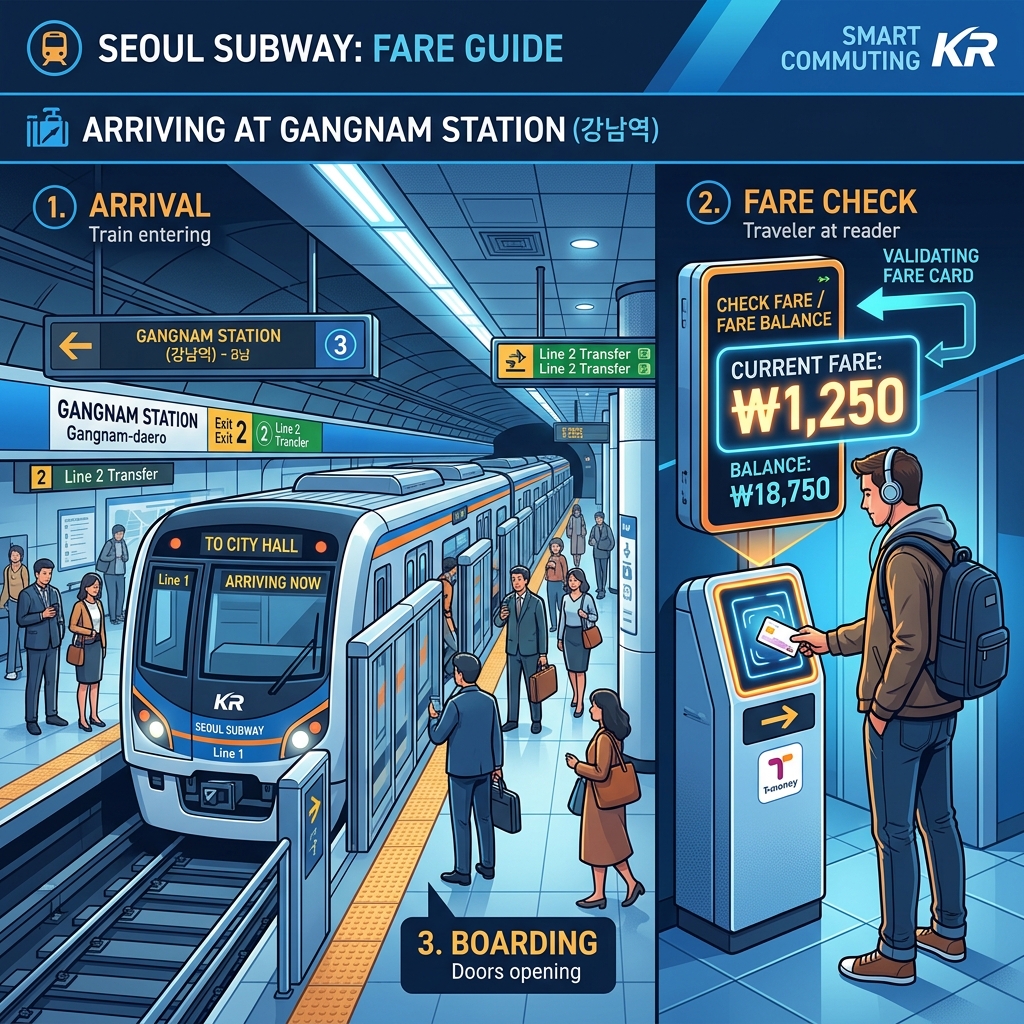
"Navigating the extensive subterranean transit tracks of Seoul requires analyzing the official pricing parameters established by the municipal operators. Many international travel blogs present outdated fare metrics that can throw off your basic daily budgeting logs. The metropolitan subway framework operates on a highly organized tariff grid that balances baseline boarding rates against total travel distance."
Standard Base Fares for Adult Passengers
Navigating the extensive subterranean transit tracks of Seoul requires analyzing the official pricing parameters established by the municipal operators. Many international travel blogs present outdated fare metrics that can throw off your basic daily budgeting logs. The metropolitan subway framework operates on a highly organized tariff grid that balances baseline boarding rates against total travel distance.
Based on official pricing records from the Seoul Metropolitan Government, understanding these initial outlays helps visitors plan their transportation capital with total clarity.
Card vs Cash Payment Deltas
For adult passengers aged 19 and older, the standard base fare for a single subway journey using an authorized transportation card is exactly 1,550 KRW (approx. $1.15). If a tourist opts to purchase a single-use paper ticket at the station kiosk terminals using cash, the base price rises by an extra 100 KRW (approx. $0.07) processing premium to exactly 1,650 KRW (approx. $1.22).
Early Morning Commuter Reductions
To balance passenger volumes during peak traffic windows, the transit network implements a specialized early bird discount policy. Passengers who scan their transportation card through the entry turnstiles before 06:30 AM receive an automatic 20% markdown on their base fare. This policy lowers the adult base boarding cost to exactly 1,240 KRW (approx. $0.92), providing a useful saving tip for early morning domestic rail departures.
Age-Based Subsidy and Discount Metrics
The local transit system incorporates a structured layer of age-based subsidies to lower commuting friction for families and students exploring the capital city.
Youth and Child Fare Allocations
Passengers aged 13 to 18 qualify for the youth transit tier, which sets the card base fare at exactly 900 KRW (approx. $0.67). For children aged 6 to 12, the system software applies a deeper discount, locking the card and cash baseline fare at exactly 550 KRW (approx. $0.41). Children under the age of 6 travel completely free of charge, provided they are accompanied by an adult guardian.
Senior Citizen Free-Transit Provisions
Based on national public welfare codes, senior citizens aged 65 and older—including international residents holding valid local identification registries—are granted completely free access to the standard municipal subway lines. Eligible passengers must retrieve a dedicated single-use welfare ticket profile from the automated station machinery before crossing the gate lines.
Re-entry Windows and Mistaken Exit Policy
A common logistical issue for first-time visitors is accidentally passing through an exit turnstile or exiting the gates prematurely to locate a public restroom venue.
The 15-Minute Free Re-entry Grid
To resolve this arrival friction, the Ministry of Land, Infrastructure and Transport enforces an automated re-entry fare waiver policy. If a passenger exits a gate line and taps back into the identical station line within a strict 15-minute window, the system automatically waives the base fare charge of 1,550 KRW (approx. $1.15). This waiver updates the transaction history as a continuous single journey.
Line Restrictions and Private Exceptions
This convenient re-entry waiver operates seamlessly across all primary lines managed by Seoul Transportation Corporation and Korail. However, travelers must note that select privately operated express links—including the Airport Railroad (AREX) non-stop gates, the Shinbundang line, and specific municipal light rail grids—are excluded from this 15-minute policy, applying full base fees for sudden gate changes.
Additional Network Surcharges and Inter-City Lines
Shinbundang Line Premium Access Fees
The high-speed Shinbundang Line connects central districts directly to southern residential sectors. Because this rail artery is operated under a private infrastructure consortium, passing through its specialized internal transfer gates applies an automatic separate premium surcharge ranging from 700 KRW (approx. $0.52) to 1,000 KRW (approx. $0.75), raising the cost of a single cross-city transit run.
Capital Region Integration Systems
The overarching transit framework integrates subways seamlessly with metropolitan city buses and regional branch lines. The integration software permits up to four free transfers within a 30-minute window (extended to 60 minutes between 21:00 PM and 07:00 AM), ensuring travelers can switch transit modes without duplicating their base boarding costs.
Minimizing Daily Expenses via Accommodation Layouts
Selecting Central Node Lodging Bases
By anchoring your hotel choice immediately adjacent to central multi-line intersections—such as central Seoul Station, Myeongdong Station, or Hongik University Station—you preserve your loaded card balances. Being positioned near these core tracks lets you access primary shopping zones and historic palace structures on foot.
Reducing High-Frequency Transit Siphons
Basing your itinerary outside the central transit ring forces your travel group to clear multiple distance-based fare increments daily. Securing an accommodation option centered within the primary commercial lanes limits your reliance on high-frequency metro lines, dropping your net transport budget significantly.
Frequently Asked Questions (FAQ)
Q1: Can I pay for my subway fare by tapping an international credit card?
Standard open-loop contactless payments using foreign-issued credit cards are heavily restricted at regular turnstile scanners due to localized banking protocols. International visitors must utilize physical transit tools like T-Money, WOWPASS, or tourist-dedicated short-term passes to clear the gates.
Q2: What is the exact cash deposit required for a single-use paper subway ticket?
When purchasing a single-use paper ticket, the machine appends a mandatory 500 KRW (approx. $0.37) hardware deposit to the fare price. Upon completing your rail trip, inserting the card template into the automated "Deposit Refund Device" located near the station exits returns the 500 KRW (approx. $0.37) bill immediately.
Q3: Does the standard subway base fare cover the trip from Incheon Airport to downtown Seoul?
No. The Airport Railroad All-Stop train operates on a separate independent tariff layout that combines standard city base prices with custom airport infrastructure surcharges, bringing the total one-way transit cost to approximately 4,400 KRW to 5,350 KRW (approx. $3.28 to $3.99) into the city center.
Q4: Are subway transfer discounts active during late-night operating hours?
Yes. The automatic transfer discount window between subways and city buses expands from the standard 30 minutes up to a 60-minute matching window for transactions executed during the late-night phase between 21:00 PM and 07:00 AM.
Q5: Is there a maximum balance limit I can load onto a standard T-Money card?
According to central electronic financial regulation parameters, the maximum monetary balance capacity allowed to be stored inside a single physical transit card chip at any individual time is exactly 500,000 KRW (approx. $372.85).
Travel Essentials
Verified GearRFID Blocking Travel Neck Wallet
★ 4.9Essential travel gear recommended for optimal safety and comfort during your journeys.
Seoul Station & Downtown Hotel Room Availability:
Secure accommodations near major subway intersection nodes to minimize transit friction and walking distance. Access official partner reservation links in the comment section below.
Check live central hotel room rates and booking discounts in the Comment Section below (Official Partner Integration)